endodontic materials

CLINICAL MATERIALS GUIDE · 2026

Endodontic Materials: Complete Guide for Indian Dental Clinics

Every material category used in modern root canal treatment — what each one does, how to choose between options, and where the clinical mistakes usually happen.

Quick Answer: Endodontic materials fall into five working categories — irrigants & chelators, intracanal medicaments, obturation materials (gutta-percha + sealer), MTA/bioceramic repair materials, and post & core build-up materials. Material choice affects clinical outcome as much as instrumentation technique — using the wrong sealer-GP combination or skipping intracanal medication in infected cases is a common cause of RCT failure.

📷 [DROP IMAGE HERE — Endodontic Materials Flatlay: GP, Sealer, MTA, Irrigants]

Replace this block with: ”Endodontic

Instruments get most of the attention in endodontics — rotary systems, apex locators, motors. But the materials you fill, medicate, and seal the canal with determine whether the treatment actually succeeds long-term. A perfectly shaped canal with the wrong sealer or an incomplete obturation still fails.

This guide walks through every major endodontic material category used in Indian dental practice today, what each one is for, and the practical decision points that matter when you’re stocking or restocking your clinic. We’ve organized it the way most clinics actually think about purchasing — by clinical stage, from irrigation through final restoration — rather than by brand, so you can map it directly onto your own case mix.

1. Irrigants & Chelating Agents

Irrigation does the real cleaning — shaping just creates space for the irrigant to work. Two materials matter most:

Sodium Hypochlorite (NaOCl)

  • Primary antimicrobial & tissue-dissolving irrigant
  • Concentration range: 1%–5.25%
  • Higher concentration = faster tissue dissolution but higher extrusion risk

EDTA (17%)

  • Removes smear layer after shaping
  • Used as final rinse, 1–3 minutes
  • Never mix directly with NaOCl — flush with saline between

A common clinical error: alternating NaOCl and EDTA without an intermediate saline rinse, which neutralizes both agents and reduces their effectiveness. Stock both with adequate chemical irrigants and side-vented delivery needles to avoid apical extrusion.

2. Intracanal Medicaments

For infected or necrotic canals, single-visit obturation isn’t always appropriate. Intracanal medicaments control bacterial load between appointments.

Medicament Best Use Case
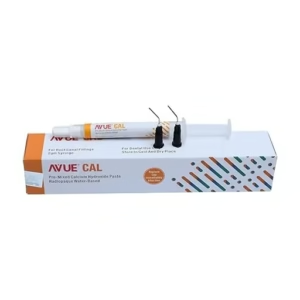
Calcium hydroxide paste Standard interappointment dressing for infected canals
Calcium hydroxide + iodoform Higher antimicrobial action; useful in persistent infection or primary teeth
Chlorhexidine gel Adjunct for resistant cases, especially Enterococcus faecalis

Browse intracanal medicaments for current stock of calcium hydroxide and iodoform-based pastes.

📷 [DROP IMAGE HERE — Gutta-Percha Points & Sealer Application Photo]

Replace this block with: ”Gutta

3. Obturation Materials: Gutta-Percha & Sealers

Obturation seals the cleaned, shaped, and disinfected canal system. Two components must work together:

Gutta-Percha

  • Standardized points (matched to file taper)
  • Accessory points for lateral condensation
  • Shop gutta-percha

Root Canal Sealer

  • Resin-based (epoxy/AH Plus type) — long track record
  • Bioceramic — bioactive, hydrophilic, growing adoption
  • Shop root canal sealers

Key principle: gutta-percha alone doesn’t seal a canal — it occupies space. The sealer fills the microscopic gaps between GP and canal wall. Mismatching a non-compatible sealer with a GP taper system reduces seal quality, particularly with proprietary rotary systems that use matched-taper points.

4. MTA & Bioceramic Repair Materials

Mineral trioxide aggregate (MTA) and newer bioceramic putties handle situations standard GP/sealer can’t: perforation repair, apexification in immature roots, pulp capping, and retrograde filling in apical surgery. They’re biocompatible, set in a moist environment, and have largely replaced older materials like zinc oxide eugenol cement for these indications. Browse MTA & perforation repair materials for current options.

5. Post & Core Build-Up Materials

After obturation, endodontically treated teeth — especially posteriors with significant coronal destruction — need structural reinforcement before final restoration. This includes fiber posts, core build-up composites, and dual-cure resin cements. Skipping adequate post-and-core planning is a leading cause of post-RCT tooth fracture. See post & core build-up materials.

6. Material Selection by Case Type

Case Type Key Materials Needed
Routine vital pulp RCT NaOCl, EDTA, GP + resin/bioceramic sealer
Infected/necrotic canal Higher NaOCl%, calcium hydroxide dressing, delayed obturation
Immature apex (open apex) MTA apexification, bioceramic putty
Perforation repair MTA or bioceramic repair cement
Post-RCT restoration Fiber post, core build-up composite, resin cement

Common Mistakes in Material Selection

⚠️ Using a non-matched sealer with a proprietary rotary taper system, compromising seal quality.
⚠️ Mixing NaOCl and EDTA directly without a saline rinse in between — neutralizes both agents.
⚠️ Skipping intracanal medication in infected canals to save a visit, increasing failure risk.
⚠️ Storing GP points loose without taper labeling — leads to mismatched obturation under time pressure.
⚠️ Delaying post-and-core planning until the final visit instead of during treatment planning.

Frequently Asked Questions

What are the main categories of endodontic materials?

Irrigants and chelating agents (NaOCl, EDTA), intracanal medicaments (calcium hydroxide-based), obturation materials (gutta-percha and sealer), MTA/bioceramic repair materials, and post-and-core build-up materials.

Which is better — resin-based or bioceramic root canal sealer?

Resin-based sealers have decades of clinical track record and are cost-effective. Bioceramic sealers are bioactive, more hydrophilic, and show promising long-term seal data, but typically cost more. Many clinics now stock both and choose based on case complexity.

Why is intracanal medication necessary between RCT visits?

Infected or necrotic canals often can’t be fully disinfected in a single visit. Calcium hydroxide-based medicaments reduce bacterial load between appointments, improving long-term success rates for complex cases.

When should MTA be used instead of regular obturation materials?

MTA and bioceramic repair materials are used for perforation repair, apexification in immature roots, pulp capping, and retrograde filling — situations where standard gutta-percha and sealer aren’t appropriate.

Where can I buy genuine endodontic materials in India?

DentistKart supplies obturation and repair materials, irrigants, and intracanal medicaments for Indian dental clinics with same-day dispatch across Delhi NCR. Browse the full DentistKart store for current stock.

Restocking your endodontic materials?

Get genuine, brand-matched irrigants, sealers, GP, and MTA — built for Indian dental clinics.

Talk to DentistKart →